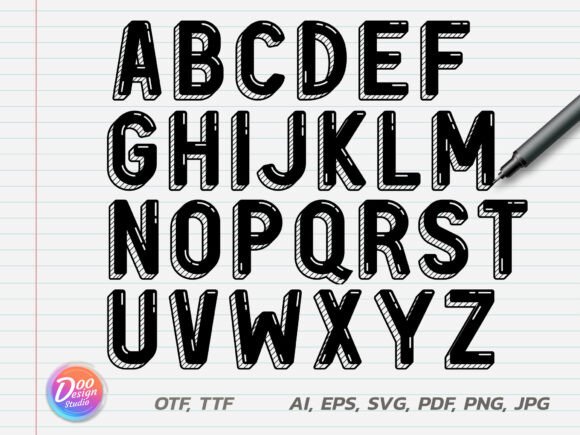
Ink: A Bold Display Font for Web Design
Ink is a decorative display font that brings a hand-drawn, sketch-like energy to digital design. With thick, uppercase characters outlined in playful hatching, it adds a unique and dynamic feel to any project. For web designers and UI creators, Ink offers a fresh way to express creativity while maintaining visual impact across different platforms.
Ink for Hero Sections and Website Headers
Ink is ideal for hero sections and website headers where bold typography can command attention. Its thick strokes and hand-drawn texture make it stand out against minimalist backgrounds or subtle gradients. When used as a headline font, Ink creates a strong first impression that aligns with brand personality and visual storytelling.
For example, a creative portfolio site can use Ink for the main title to reflect an artistic, expressive identity. On landing pages, it enhances the visual hierarchy by drawing the eye toward key messages without overwhelming the layout. Pairing Ink with a clean sans serif body font ensures readability while keeping the design cohesive.
Ink for Call-to-Action Buttons and Interactive Elements
Ink works well for call-to-action buttons and interactive elements when used strategically. Its boldness makes it suitable for short phrases like "Get Started" or "Join Now," especially on dark backgrounds or image overlays. The hatching effect adds a tactile quality that can make buttons feel more engaging and memorable.
On mobile screens, ensure the text size is large enough to maintain legibility. Avoid using Ink for small button text, as the intricate details may not render clearly on lower-resolution devices. Instead, reserve it for larger, prominent calls to action where its character can shine.
Ink for Online Store Banners and Product Pages
Ink is a powerful choice for online store banners and product pages, especially for brands that want to convey a playful, artisanal vibe. Its hand-drawn style can complement handmade goods, boutique fashion, or creative products that benefit from a personal touch. When used in banners, Ink helps create a visual anchor that guides users through the shopping experience.
For product landing pages, consider using Ink for section headings or subheadings to break up content and add visual interest. It pairs well with neutral color schemes and can help differentiate a brand in a crowded marketplace. However, avoid overusing it—limit its presence to key areas where it enhances the message rather than distracts from it.
Ink for Blog Headers and Content Sections
Ink can elevate blog headers and content sections by adding a sense of energy and creativity. Its bold appearance is perfect for headlines that need to capture attention, especially in lifestyle, art, or design-related blogs. When paired with a simple serif or sans serif font, it creates a balanced look that supports both aesthetics and readability.
For long-form content, use Ink sparingly. Apply it only to primary headings or subheadings to maintain a clear reading flow. On smaller screens, test how the font renders to ensure it doesn’t compromise the user experience. Ink’s personality shines best when used thoughtfully, not as a background element but as a focal point.
Ink for Brand Identity and Logo Design
Ink is a strong candidate for logo design and brand identity projects that require a distinctive, handcrafted look. Its thick, uppercase letters and hatching give it a confident, professional edge that works well for startups, creative agencies, and niche brands. When used in logos, Ink conveys a sense of authenticity and originality that resonates with modern audiences.
For brand identity kits, include Ink as a primary typeface for headings, titles, and key messaging. Pair it with a complementary font for body copy to ensure consistency across all touchpoints. Whether it's for social media graphics, packaging design, or email newsletters, Ink adds a signature style that reinforces brand recognition.
Ink for Digital Ads and Social Media Graphics
Ink is highly effective for digital ads and social media graphics where visual impact is critical. Its bold, stylized appearance makes it ideal for headlines, captions, and promotional text that needs to stand out in a fast-paced feed. The hand-drawn effect gives it a human, approachable quality that can increase engagement and memorability.
When designing for social media, keep the text concise and focused. Use Ink for short, punchy phrases that align with your campaign goals. Ensure the font is legible at various sizes and contrasts well with background images or colors. Ink’s versatility makes it a valuable asset for creating eye-catching visuals that drive clicks and conversions.
Ink for Creative Portfolio Sites and Personal Branding
Creative professionals such as illustrators, photographers, and designers can use Ink to build a strong personal brand on their portfolio sites. Its dynamic style reflects a unique creative voice and helps differentiate their work from competitors. When used in headers, project titles, or bio sections, Ink adds a layer of personality that enhances the overall aesthetic.
For personal branding, pair Ink with a clean, modern font for body text to balance its boldness. This combination ensures that the design remains professional while still expressing individuality. Whether it's for a website, LinkedIn profile, or digital business card, Ink helps create a lasting impression that aligns with the creator’s vision.
Ink for Conversion-Focused Layouts and User Experience
Ink can support conversion-focused layouts when used to highlight key messages or CTAs. Its visual weight draws attention to important elements, making it ideal for landing pages, sales funnels, and checkout processes. However, it should be used with care to avoid cluttering the interface or confusing users.
For user experience, prioritize clarity and accessibility. Test Ink in different contexts, including dark mode, light mode, and varying screen sizes. Ensure that it complements the overall design rather than competing with it. When used correctly, Ink can enhance the emotional connection between the user and the brand, driving engagement and trust.